PI Steve Rockfish stands in for his partner, Jawnie McGee, at a Women Investigators in Crime conference and lands a cold case. Karen Lazar was eight years old when she disappeared and later found murdered. Now Rockfish and McGee and amateur sleuth Estelle Cummings are digging into the past to unearth answers and more than a few secrets.
This is a 2-part episode. Listen to part 1 here or wherever you get Mysteries to Die For podcast.
ABOUT Ken Harris
Ken Harris retired from the FBI, after thirty-two years, as a cybersecurity executive. With over three decades writing intelligence products for senior Government officials, Ken provides unique perspectives on the conventional fast-paced crime thriller. Ken previously participated in Mysteries to Die For seasons 5 & 6. He is the author of the “From the Case Files of Steve Rockfish” series. He spends days with his wife Nicolita, and two Labradors, Shady and Chalupa Batman. Evenings are spent playing Walkabout Mini Golf and cheering on Philadelphia sports. Ken firmly believes Pink Floyd, Irish whiskey and a Montecristo cigar are the only muses necessary. He is a native of New Jersey and currently resides in Virginia’s Northern Neck.
Wife, mother, and detective, Minka Avery showed up at the new middle dedication as a wife supporting her husband. When her daughter wanted some playground time, she put on her mom hat and chaperoned. And when she found the body of the drama teacher, Detective Avery was on the job.
Listen here or wherever you get Mysteries to Die For podcast
ABOUT Tetherball From my favorite source, Wikipedia, and the website Backyard Sidekick traces tetherball back to the late 1800s and early 1900s where it was found on playgrounds. Variations have the game played with hands or with racquets while having the same rules. If you haven’t played, which I haven’t, it is a two player game. Players stand on opposite sides of the pole. One player hits clockwise, the other hits back, counterclockwise. The game ends when one player wraps the line around the pole. There were a surprising number of rules and variations for what seems like a simple game.
ABOUT Karina Bartow KarinaBartow.com Karina Bartow grew up and still lives in Northern Ohio. Though born with Cerebral Palsy, she’s never allowed her disability to define her. Rather, she’s used her experiences to breathe life into characters who have physical limitations, but like her, are determined not to let them stand in the way of the life they want. Her works include Husband in Hiding, Brother of Interest, Accidental Allies, Forgetting My Way Back to You, and Wrong Line, Right Connection. She may only be able to type with one hand, but she writes with her whole heart!
Barrister Anthony Bathurst accepts an invitation as a last minute replacement on the cricket team for Considine Manor. Little did he expect the holiday from working as a lawyer would be the start of him working as a detective.
This is an adaptation of The Billard-Room Mystery by Brian Flynn
Listen here or wherever you get Mysteries to Die For
ABOUT Billiards
Today we turn to the Games For Fun website to learn about billiards. Billiards includes all sports that are played with a cue stick and billiard balls. Pool (also called pocket billiards), carom billiards, and snooker are categories of billiards. Our story today referred to a billiards table, but it was more accurate to call it a pocket billiards table or a pool table. The Billiard Congress of America reports the game started as an outdoor described as similar to croquet. It was brought indoors as a tabletop game, possibly originating in France. Initially, it retained some of the hoops and sticks of the outdoor game, but those eventually faded. There are many ways to play billiards, ranging from using 3 balls to 22 balls, with and without pockets. Here’s a fun fact: visitors from England taught Americans how to put a spin on the cue ball, explaining why only in America is that spin called “English.” Check out these sources: Games for Fun/ the history of pool and BCA-Pool.com
ABOUT The Billiard Room Mystery by Brian Flynn
The Billiard Room Mystery was the first case for barrister Anthony Bathurst and the first mystery for English author Brian Flynn. It was challenging to find information on an author with over 54 mysteries to his name. The best write ups were on Classic Mystery Novel blog and Crime Is Afoot blog. Born in 1885 in Essex, Flynn, like many others of that period, had a varied background. His formal education ended when he went into the civil service, serving as a special constable during WWI. He taught while he worked for the government and enjoyed acting. It was reported that he began writing mysteries because he was not impressed with much of what he read. I can believe that reading the scene where he is critiquing the styles of leading fictional detectives at the time. The Billiard-Room Mystery is now in the public domain and can be downloaded from the Project Gutenburg. Dean Street Press has been reprinting much of Brian Flynn’s catalogue, which can be found at online retailers.
Like you, I’m not one thing. I’m a writer, an engineer, a wife, and a mother. What is first on the list depends on the day. Beyond the title I claim, I’m a person who loves learning and thoroughly enjoys a good puzzle, is creative and gets bored easily. I hold a BS in Civil Engineering from Case Western Reserve University and an MS in Civil Engineering from Cleveland State University, which gives me absolutely no background in writing, but I do it anyway. Writing mysteries and engineering isn’t as different as you’d think. Both require using logic and process to get from a starting problem to a solution.
Fast Times, Big Cityis an amateur sleuth adventure. It’s the late 1950s and Bud Palmer is living his best life as a sports reporter for the Miami Herald. Then his Uncle Rick, a self-proclaimed PI, gets in hot water up to his eyeballs and clutches onto Bud as his life preserver. Now Bud has to go to cold NYC to find a girl he’s never met and recover a briefcase she stole before the Chicago mob gets impatient.
Bottom line: Fast Times, Big City is for you if you like reluctant heroes, plot driven quests, and immersion in eras gone by.
Listen to the first chapter here or wherever you get Mysteries to Die For
The star of this story is the premise. A clean-cut Miami sports reporter with a perpetual tan travels to a wintery NYC on a quest for a girl with stars in her eyes and the briefcase she stole. The why is a deadbeat uncle who tried to grift the wrong guys – Chicago mob – and was the reason the girl got big ideas of acting in NY. It’s a classic fish-out-of-water story, with Bud Palmer arriving in NYC with his warmest clothing being a tennis sweater.
In our modern world, franchises and uniform laws can make one city blend into another. Frome does an amazing job of showing us Miami, with its lush foliage and mangoes, and then NYC, with it’s art, music, neighborhoods as well as noise, neon, crowds. The language is different between the two cities as are the customs and Bud has to figure it all out on the fly.
Bud is an easy hero to cheer for. He is a reluctant hero but doesn’t get melancholy about it. He is a stand-up guy who doesn’t compromise his character as he navigates the mess. The lead character for the mob is named Ed. He’s a middleman who is getting pinched, and in turn pinching Bud. I didn’t have feelings one way or the other for Ed in the beginning but became sympathetic as I saw just how powerless he was in this escapade.
The pacing is methodical. This is a plot driven story, not action. Every chapter had a purpose and progressed the plot. The story was primarily from Bud’s POV but injected enough from Ed that the reader realizes just how big of a mess the setup is.
The logic of the quest – Bud finding the girl and the briefcase – is straightforward and holds up. I had some trouble with the motivation of the inevitable side quests. I believe we were intentionally somewhat outrageous as a caricature of the NY art scene, at least that was the way I took them.
Characters driving their own story is a big thing for me. Bud didn’t ask for this quest, but once he took it on, he moved forward. He wasn’t given much to work with – a picture and a name – so he had to create something out of nothing.
The fabric of the storytelling was woven with historical events, like the Castro led rebellion in Cuba, and cultural events, like the publishing of TO KILL A MOCKINGBIRD. This gave the story fresh a literary / arts texture.
The year the story was set is never stated (even though Bud reads a newspaper like everyday.) Events referenced included an imminent end to the Cuban revolution (Jan 1959), a pre-lease review of TO KILL A MOCKINGBIRD (published July 1960), Marilyn Monroe’s marriage to Arthur Miller (married 1957, divorced 1961), and WEST SIDE STORY on broadway (debut Sept 1957, closed June 1959).
It is a fun read, watching Bud get deeper into the trouble he didn’t cause, and then figuring out how to dig his way out of it.
The Fast Times, Big City was released from BQB Publishing and is promoted by Partners In Crime Tours and is available from AMAZON LINK and other book retailers.
About Shelly Frome Shelly Frome is a member of Mystery Writers of America, a professor of dramatic arts emeritus at UConn, a former professional actor, and a writer of crime novels and books on theater and film. He also is a features writer for Gannett Publications. Fast Times, Big City is his latest foray into the world of crime and the amateur sleuth. He lives in Black Mountain, North Carolina. http://www.shellyfrome.com/
Partners In Crime Tours represents a network of 300+ bloggers offering tailor-made virtual book tours and marketing options for crime, mystery and thriller writers from around the world. Founded in 2011, PICT offers services for well-established and best-selling authors, as well as those just starting out with their careers. PICT prides itself on its tailored packages with a personal touch from the tour coordinators. For more information, check out their website partnersincrimetours.com
It’s December 2012 and Adam and Jessica Bozena are celebrating the world NOT coming to an end along with the Mayan calendar by throwing a party. A 1980s themed customer party. But the party isn’t the celebration of the good old days. Instead, Byron Cates is dead. River City Detectives Peter Elias and Joseph Finch crash the party where everyone had a motive to kill.
Listen here or wherever you get Mysteries to Die For podcast
ABOUT Truth or Dare The origins of truth or dare weren’t as well documented or researched as some of the other games used this season. The Wikipedia page refers to entries as early as 1712 describing a game that is similar to truth or dare, although with one person being in control. Certainly, it isn’t a leap to see this as a social party game in the era preceding television and radio. The most interesting entries I came across were on the social platform Quora where the question was asked…what’s the farthest you’ve ever taken Truth or Dare. The posts responding themed on creative nudity and sex and not, thankfully, murder.
ABOUT Frank Zafiro Frank Zafiro writes gritty crime fiction from both sides of the badge. During his life, he has been a military intelligence linguist, a police officer (a twenty year career, retiring as a captain), and an independent consultant and instructor. He has taught both writing and police related topics at the collegiate level and professional venues. Through it all, he has been a writer. To date, he has published 48 novels, over 100 short stories, and appeared in over 50 anthologies. He lives in Redmond, Oregon, with his wife, Kristi, who is a teacher. www.frankzafiro.com
An international Twister competition is drawing the game’s elite to Schamberg, IL. Among the headliners are the returning champion The Garbage Man, Mister Twister, Knockout_Kitty, and The Spinner Doctor. When one of the competitors is found murdered, his right hand in a pool of blood, Detective Sam Carlisle has to separate fact from bravado to bring a killer to justice.
Listen here or wherever you get Mysteries to Die For podcast
ABOUT Twister The game Twister was created with the original name of Pretzel in 1966. Working for the Guyer Company, toy designer Charles Foley and graphic designer Neil Rabens combined ideas for a game where people were the pieces and a colorful mat concept into a game that is very much the one we know today. Foley and Rabens, with the support of their employer, applied for and received a patent, which was granted in 1969. Milton Bradley was approached for production, who took on the project but renamed it to Twister. Twister faced some controversy from critics claiming it was “sex in a box.” Twister withstood challenges, expanding sales throughout the world. In 2015, Twister was inducted into The Strong National Museum of Play. Fun fact from the museum of play website, The official Guinness Book of World Records temporarily banned the Twister category “most contestants” after the University of Massachusetts in Amherst’s massive Twister game involving 4,160 players in 1987. Guinness cited “evidence of officiating inconsistencies.”
ABOUT Jason Little JasonLittleWriting.com Jason Little has spent the majority of his working years in sales and marketing. He currently sells life insurance, where he gets to talk to people about their imminent demise for a steady paycheck. He loves to delve into the human condition and writes in a variety of genres from science fiction and horror to mystery and suspense. When he isn’t writing, Jason has a VR headset strapped to his face or he is sweating to a fitness challenge like 75 Hard. He actively discusses work/life/writing balance, the writing process and other miscellany at JasonLittleWriting.com. He is a native of Michigan and currently resides in Texas.
In the town of Bonbanni, Louisianna, magic is a way of life. When murder intrudes, Lt. Pierre-Luc “Mystic” Fountineau uses the vast skills at his disposal to determine who or what caused a young woman to fall to her death.
Listen here or where you get Mysteries to Die For podcast
ABOUT Tarot Tarot cards date back to the 15th century where they were used in various parts of Europe to play card games. The earliest references date to the 1440s and 1450s and the region of the northern cities of Venice, Milan, Florence, and Urbino. According to a 2016 article posted by Tim Husband, curator, Department of Medieval Art and The Cloister with the Met Museum, the complicated nature of the tarot game points to the origins of the game being decades older. Tarot is a trick taking game and the rules have not changed significantly since the 15th century. According to Wikipedia, it was in the late 18th century that tarot gained its association with fortune-telling thanks to French occultists. Unsubstantiated claims began being made about the meaning of the cards. These cards began with Antoine Court and Jean-Baptiste Alliette in Paris. Alliette, who also went by the name Etteilla, is credited with first creating an adapted tarot set specifically for occult purposed around 1789. Modern derivatives of these decks are the only ones available in English speaking countries. There is a lot to learn about both types of tarot cards. Check out the links to dive down your own rabbit hole.
Like you, I’m not one thing. I’m a writer, an engineer, a wife, and a mother. What is first on the list depends on the day. Beyond the title I claim, I’m a person who loves learning and thoroughly enjoys a good puzzle, is creative and gets bored easily. I hold a BS in Civil Engineering from Case Western Reserve University and an MS in Civil Engineering from Cleveland State University, which gives me absolutely no background in writing, but I do it anyway. Writing mysteries and engineering isn’t as different as you’d think. Both require using logic and process to get from a starting problem to a solution.
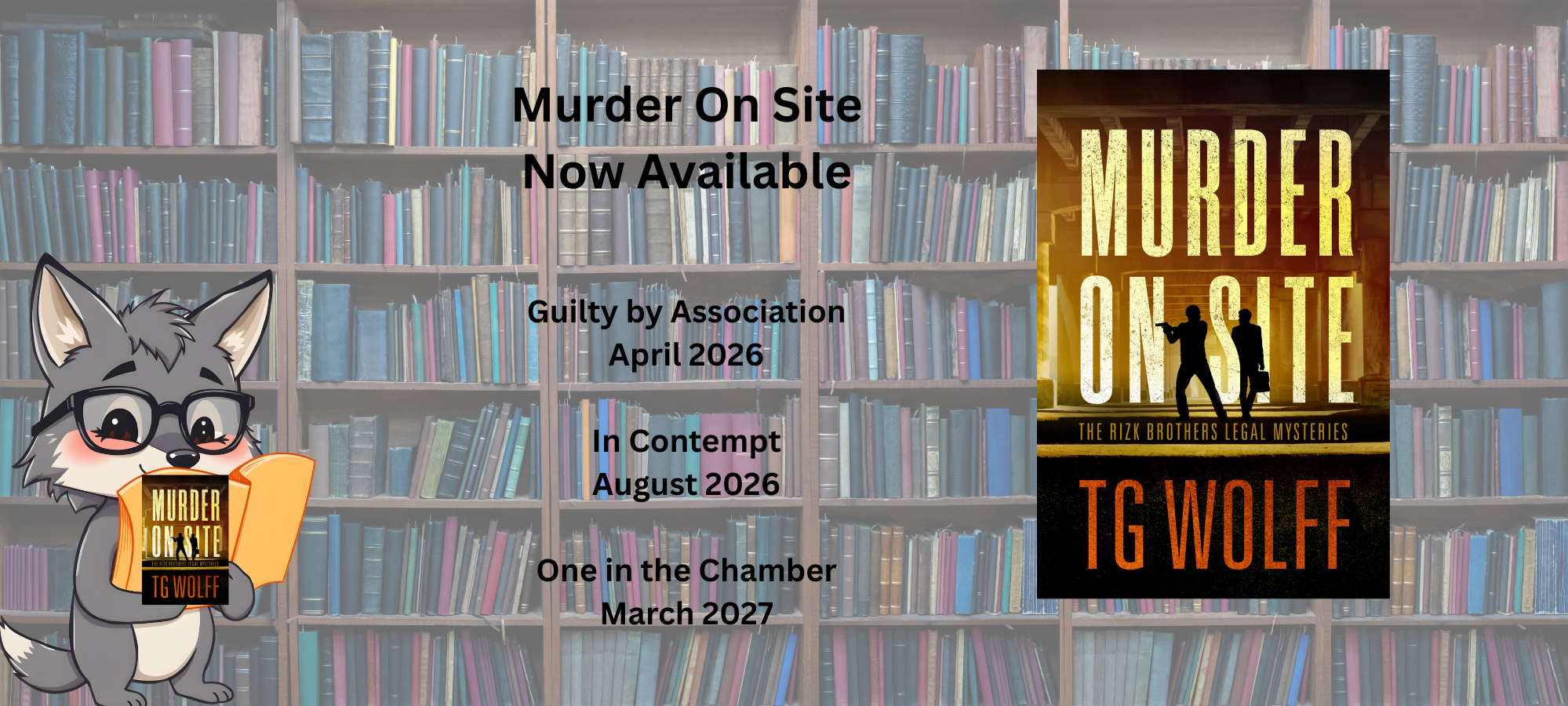
A special thank you to Ed Teja whose work editing this episode made it better. Find me at www.tgwolff.com
Detective Minka Avery is enjoying a rare day off poolside with her daughter. But an annoying game of Marco Polo turns into the end of Minka’s day off when the player turns up dead.
Listen here or wherever you get Mysteries to Die For podcast
ABOUT Marco Polo Marco Polo, as you got from today’s story, is an aqua “blind man’s bluff” – the tag game, not the poker game. According to Wikipedia, the origin of the name isn’t known. It isn’t related to horse-and-ball game or the people-and-ball game. There isn’t any reported connection between the explorer Marco Polo – Venetian explorer, born 1254, died 1324. Intriquing, isn’t it? The land version, Blind’s Man Bluff, dates back to the 16th century. Playing in water was a natural I’m sure. The game was referenced by this name in a late 1960s survey asking respondents to name a water game. More than a few said “Marco Polo.”
ABOUT Karina Bartow KarinaBartow.com Karina Bartow grew up and still lives in Northern Ohio. Though born with Cerebral Palsy, she’s never allowed her disability to define her. Rather, she’s used her experiences to breathe life into characters who have physical limitations, but like her, are determined not to let them stand in the way of the life they want. Her works include Husband in Hiding, Brother of Interest, Accidental Allies, Forgetting My Way Back to You, and Wrong Line, Right Connection. She may only be able to type with one hand, but she writes with her whole heart!
At a couples getaway at a posh New England golf resort, the weather isn’t the only thing that takes a turn for the worse. Lindsay Strauss, the last member of the group scheduled to arrive, checks in dead. Detectives Spencer and Flores have a club house classic on their hands to figure out who strangled Lindsay.
Listen here or wherever you get Mysteries to Die For podcast
Meet Rick Ollerman
Rick Ollerman is the author of four novels, Turnabout, Shallow Secrets, Truth Always Kills and Mad Dog Barked as well as the non-fiction collection Hardboiled, Noir and Gold Medals. He was also the editor of Down & Out: The Magazine and has written numerous short stories and edited several crime fiction anthologies.
A series of windshields shattered by projectiles had California drivers nervous. In the most recent attack, the driver lost control and died. To protect people attending the popular Fun Day at the Park event, Chief Rollins amped up police presence on area streets. That left just himself and Detective Stephens, frest from maternity leave, inside the park. As she watches the marbles tournement, she starts to wonder if there was more to the mibsters than just their marbles.
Listen here or wherever you get Mysteries to Die For podcast
ABOUT Marbles
Tombs of ancient Egyptians, ashes in Pompeii, Native American archeology, marbles have been found literally everywhere. They date back so far and to so many places, that the origins of marbles has yet to be discovered. According to the website Mental Floss, the earliest marbles were stones polished smooth by rivers. Artists made marbles from clay, stone, and glass. For centuries, these were made by hand. In 1884, mass production of clay marbles began in Akron, Ohio. The manufacturing invention lowered the price of marbles from about a penny each to a bag of 30 for a penny. Mass manufacturing of glass marbles was also an Akron, Ohio invention, this time in 1915. There’s a link in the shownotes to the article with a video of how they’re made.
When it comes to the game, Mental Floss gives us the conundrum that there is no single game called “marbles” and any game played with marbles can me called “marbles”. There are a lot of games, including the one described in today’s story.
Judge Debra H. Goldstein is the author of Kensington’s five book Sarah Blair mystery series, Should Have Played Poker, and IPPY Award winning Maze in Blue. Her novels and short stories, which have appeared in numerous periodicals and anthologies, have been named Agatha, Anthony, Derringer, Claymore, and Silver Falchion finalists and received Silver Falchion, Bethlehem Writers Roundtable, and Alabama Writers Conclave awards. She serves on the national board of Sisters in Crime and previously was a national board member of Mystery Writers of America and president of the Guppy and SEMWA chapters. Find out more about Debra on her website: https://www.DebraHGoldstein.com








 TG Wolff