1 Last Betrayal is a thriller. Angeline Porter is picking up where she left off from the 2nd book in the series, Tainted Times 2, putting it all on the line for her half-sister. Bibi has disappeared and based on the last few texts, it wasn’t willingly. Angeline flies from Oregon to Florida to extract her sister from a hornets nest that includes a local detective, an ethically questionable FBI agent, a totally unethical mob queen, and a half-brother who only wants to be her family.
Bottom line: 1 Last Betrayal is for you if you like intricately woven plots that unravel one knot at a time.
Strengths of the story. 1 Last Betrayal checks a lot of boxes on the thriller checklist. First, the lead character being in mortal danger — check. Angeline, who is also called Ang, Angie, and Porter, is held at gun point, beaten, and kidnapped. She jumps from frying pan to frying pan, never quite knowing where the fire is. Second, the story has to resolve within a certain time — check. After 24 hours, most missing persons cases don’t end with a living resolution, according to the book. Three, the motivations of the other characters are hidden from the lead — check. Every one of the people helping Angeline has an ulterior motive, but those secrets are tightly held.
Where the story fell short of ideal: It is common in thrillers to have scenes from the point of view of multiple characters, enabling us readers to know what is going on and to be anxious on behalf of our heroes. 1 Last Betrayal is told only from Angeline’s point of view. In a story based on false motives, Angeline becomes confused about what is really going on. Without the ballast of other points of view for us to root in, the chaos element is dominant in the middle section of the book. For those who thrive on chaos, you’ll love it. For those who don’t, stick with it and enjoy the ride.
1 Last Betrayal is the 3rd book in a trilogy. I recommend reading the earlier books, Revenge in 3 Parts, and Tainted Times 2 first. Ms. Brooks last installment continues with characters and situations built in the first episodes. For maximum enjoyment, start from the beginning, likely an unnecessary recommendation as most of us wouldn’t conceive of starting a series anywhere but book 1. Links to all three books are in the show notes.
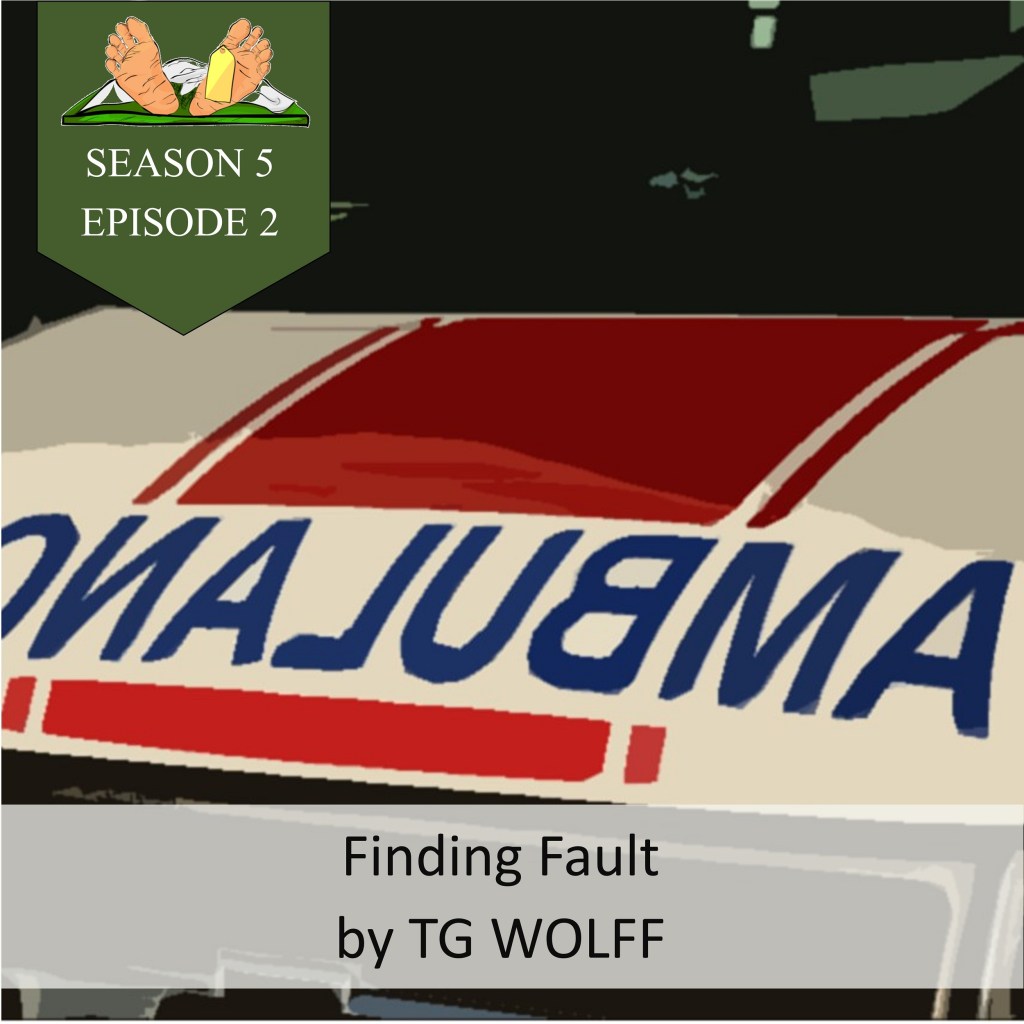
An accomplished lawyer is dead. The ME calls it an overdose; the lawyer’s wife calls bullshit. Now Detective Jesus De La Cruz has to determine who is at fault.
I left Memphis early, meeting the sun somewhere around Jackson as I stopped for breakfast. If you ever wonder if the food at a diner was any good, just look to the spread of asphalt outside. If it’s nothing but stripes, keep going. But if it’s wall-to-wall taillights and license plates, that is a place worth stopping at.
This diner had three empty spots. Near, far, and really far.
Near looked like an option but it wasn’t. Close to the entrance, a big old passenger van with Missouri plates parked three-quarters in one space and one-quarter in another.
It would have fit in one spot, but the driver either didn’t have the skills or thought they were special. I was leaning toward the first given the number of dents on the white body. The mess of a parking job left plenty of space for my Ultra Classic.
But you don’t park a thing of beauty next to an idiot.
Far looked like an option, too. There a man sat on the parking block, feet planted wide, elbows on knees. In one hand he held a to-go cup of coffee; in the other a cigarette. A drag. A sip. Another drag.
I respect a man enjoying his breakfast. There was no need to chase him out.
Really far wasn’t a space so much as a triangle patch at the end of the line. It was made for a bike.
My bike.
I parked and locked her then headed to the door, saying good morning to the coffee drinker on the way. Inside, the diner was hopping. I wanted the counter, but it was full. I settled for a table, taking the seat that let me see the whole place. People watching has always been a hobby of mine. Most people sat in two’s, like the diner was an ark and Noah himself seated them.
Two construction workers.
Two old men.
A mother and daughter, which still made two.
There was one group of eight, which sat as two tables of four. They were talking as much as they were eating as the waitress set the last of the plates on their table.
She left them for me. “Morning, Sunshine. Care for coffee?”
“Morning back to you,” I said back with as much enthusiasm as she gave to me. “Yes, to the coffee…Daisy.”
She smiled, showing off a perfect row of pearly white teeth. “We have a few specials this morning. The first is two eggs as you like ‘em with a side of biscuits and gravy. Then we have a—”
“The first is good for me,” I said, cutting off the list of things I didn’t want. Biscuits and gravy, well, that could have been my middle name.
“Miss? Miss? Could you bring more coffee?” The woman calling for Daisy was the mothering type. And the man she mothered was a tall and wore a suit.
He was a swan in a diner of ducks.
The twin quads – the two tables of four – became the entertainment I watched while I waited for my breakfast. The flock was made up of five women and three men. The swan was the center of attention, the ducks fussy about him. Every time the woman to his left went to take a bite of her pancakes, the swan interrupted.
Pass the salt. A pat of butter. Be a dear, two strawberry jams.
The twin quads kept Daisy hopping. Why was it that groups like them couldn’t get it together to ask for everything all at once?
When Daisy brought my breakfast, her disposition wasn’t quite so sunny. “Here you go, just as ordered.” She set two plates down with enough food to feed a crew. “Let me get you a warmup on the coffee and anything else?”
“It’s good Daisy,” I told her softly. “It’s all good.”
And it was. I’d put it second only to my own gravy.
My belly full, I paid my bill, gave Daisy a sunny tip, and rode east. It wasn’t long before a billboard caught my attention. A shooting range where you can bring your own or fire their collection of “old and unusual firearms.”
Bear Arms was a place for sportsman and lover of firearms. I count myself as both. My own guns were at home, so I had to take advantage of Bear Arms’ arsenal.
A 32 caliber Smith & Wesson No. 2 Army. A Colt Lightening 50 Express Carbine. A Peabody Martini Exhibition Grade Musket. A Winchester Model 1894 Rifle, a model I had in my own collection.
I spent a peaceful hour making all kinds of noise. The powerful release of gunpower and lead sung up my arm to my soul. It was that part of me that was hurting. I’d killed a man. Whether intentional or not, it was my wheels that ran over Dexter Green. My hand, or rather my foot on the gas pedal that killed him.
I took in a deep breath, looking to heaven as I rode. I have a tight relationship with God. I don’t expect he’s too happy with me right now. I know I wasn’t. Maybe the clean up I’d done in Memphis would count in my favor. I could only hope.
A couple hours later, I parked the Ultra Classic in another parking garage, this one attached to The Hermitage. In 1910, it cost a million dollars to build, which was probably something stupid like $110 million today. Now that I think of the costs of things, it was a pretty good deal.
The Hermitage was an architectural jewel, full of art and deco, marble and glass, arches and staircases. After checking in, I found a comfortable place in the main lobby to admire the scenery. I can do a lot of things, build nearly anything, but I can’t paint for shit. So, naturally, I respect the hell out of anyone who can. Given that my days were numbered, I took the time to appreciate the manmade beauty around me.
A couple about my age sat nearby talking about the prior day’s visit to the Grand Ole Opry and the Opryland Resort property. Teresa and I had been to Nashville years ago. We didn’t make it to the Opry, bad timing and all. So programmed the GPS, saddled back up, and made the short trip to the Grand Ole Opry.
The Opry is a performance hall, the roots of country music. It had re-invented itself more than a few times, keeping with the changes in style and technology. Nashville grew around it, including the Gaylord property with it’s small world inside our bigger one. It has a nice hotel with more than a few restaurants and a garden worth seeing whether you liked plants or not.
I bought the last ticket for the tour of the performance hall. It was a special ticket because of the behind the scenes peek at the stage and the seat to the show that came with it. If you weren’t aware, the Opry is a radio show. People traveled in from near and far to hear performances from country music stars past, present, and future.
Crossing the parking lot, one of those things that once you see, you can’t unsee, sat in front of me. It was luxury RV. On the side, in bold, colorful lettering was “Jesus Saves…and So Does Bob.”
I just shook my head. What else was there to do?
I walked on and through the awaiting door. To enter the Opry, you have to go through a metal detector. Not a surprise in this day and age, but something I wasn’t prepared for. A thin man in a security uniform slid a bowl to me. “Keys, chains, and so forth in the bowl, please. You can leave your belt and shoes on.”
I started emptying my pockets.
Keys.
Chain to my wallet. I kept the wallet.
Pocket knife.
Ka-Bar knife I picked up in Memphis.
Six 30-caliber casings.
What was there to say? I looked up, waiting for the raised eyebrow and handcuffs. The guard took my bowl and handed it around his side of the metal detector. He didn’t say a word, so I walked through. It went off, so they wanded my belt and my boots. Then looked past me.
I turned, expecting to see someone wearing a badge.
I found a woman near to a hundred figuring out how to get her walker through the arch.
Another guard, the one who received my bowl, put it on a shelf and handed me a claim ticket. “The tour starts in the meeting room, down on the right.”
Huh. Not a word about the knives or the casings.
I took my time wandering down to the meeting room. I suppose with arrest imminent, half the people would spend time looking over their shoulder every twenty seconds. The other half would race point to point, never seeing the sights along the way. Me? I was in the third half, those who knew this, more than any other, was the time to smell the roses.
I studied the pictures. Artists I listened to. Some I sung along with. There was a lot of history in these walls. The pictures led to the meeting room minutes before the tour was to start. I entered and joined twenty-some others. About half were clustered in a group and who should be at the center but the swan from the diner. His ducklings were still fluttering around him.
The swan was dressed finely. He was tall, a good six-two. He wasn’t broad, which gave him the illusion of even more height, despite the size of his belly. His hair was styled with not a strand out of place. His cheeks were ruddy, laugh lines carved into the corners of his eyes. He wore a suit, one that had been tailored given the difference between his waist and his chest. He was a man of means.
His flock was just ordinary folks. The ladies wore dresses or nice pants with a blouse. The men for dress pants and button-down shirts. One wore a tie. They were neat and clean but there was a difference between the swan and his ducks.
The tour was led by a little blonde with a broad smile. “Hey y’all, gather round and we’ll get started. That’s right. Come in close. I don’t bite.”
We did as she said, surrounding the woman who couldn’t have broke five-foot tall. For the most part, people used their common sense, the taller letting the short up front.
The exception was the swan, who used an arm to sweep a woman behind him. It was the one who sat next to him at the diner. The one who he hadn’t let eat a bite without interruption.
“Welcome to the Grand Old Opry. I’m Dorothy and while this is not Oz, you should be prepared to be amazed.” Dorothy laid out the rules about staying with the group, keeping our hands to ourselves, and what we shouldn’t be doing with cell phones. Then we began to parade through the public and private spaces of the Opry.
“You were at the diner in Jackson,” said one of the ducks. “I’m Martin. We came all the way from Missouri.”
“Hippy,” I said, holding out my hand to shake his as I remembered the passenger van that took two spots at the diner. “I’m from a little bit of everywhere.”
Martin laughed. “I like that. Wish I could say the same.”
We started talking as strangers do. Been here before? No. Favorite country artist? Willy Nelson. Roy Clark. Porter Wagner. Johnny Cash. Wayland Jennings. Buck Owens. I could keep going.
Favorite song? See previous answer.
It was a pleasant conversation. One I enjoyed. Until the swan looked over his shoulder and saw Martin with me. Those waxed brows furrowed and he snapped his fingers. Martin looked guilty as a schoolboy and left me to take his place in the flock.
Our group continued down a corridor and stopped as Dorothy went into an elongated response to a question.
“Do you know where you’re going to spend eternity?”
The voice over my shoulder belonged to the swan. He looked down at me, both figuratively and literally.
“Yes, sir. I do,” I told him. “Do you?”
He tilted his head, a small grin on his face. It wasn’t a nice smile. It was more like he was royalty and I was a peasant. “I’m an ordained minister.I know where I’m going. Reverend Bob,” he said. “Maybe you’ve heard of me.”
I offered my hand. He accepted with a firm shake of a hand wearing two thick rings.
“Can’t say as I have. I’m Hippy,” I said. “Maybe you heard of me.”
His smile grew. “Mark this day on your calendar Mr. Hippy, because it is the day you are saved. It is the day you stood in the presence of the Lord’s greatness through his disciple and received his forgiveness.”
This man, with his fancy suit and waxed smile, stunk like a skunk. “How do you know I need forgiving?”
“We all come into this world needing forgiving,” he said. “We are human beings, born with the seed of evil. That seed grows as a man grows. Sins of the body, Hippy, those can be forgiven.”
Dorothy led our group on and we followed.
I’ve lived a long life and have made my peace with God. It took some time but what he said eventually got through this hard head of mine. I’ve been lucky to meet real people of God. People who give without ever asking for something in return. Preachers who bust their ass on the jobsite each day because the Lord’s gospels were their calling, not their paycheck.
I have stood in the presence of true goodness.
Which was why I knew exactly what Bob was.
“A water for you, Reverend Bob.” One of the ducks handed him a bottle. “Do you need anything else?”
Bob opened it and sipped. He sneered and handed it back. “It’s not cold.”
“Oh, I’m so sorry.” Her face fell in embarrassment. “It must have gotten warm in my bag. Let me run back to the van and get one from the cooler.”
I waited for him to decline the offer. After all, we were in the middle of a tour. He did not. The woman left the tour group, heading out the way we had come in.
“Where are you going to spend eternity?” I asked him.
“At our Father’s side.” There was no hesitation in his voice, no doubt.
I guess I shouldn’t be surprised that this man saw himself at the front of the line, but I was. He went on, talking about sacrifice and suffering, sins and forgiveness. The funny thing was, I got the impression, he wasn’t talking about himself. He was talking about everyone else.
The other man in his flock joined us. “Reverend Bob, did you—”
“Harry, can’t you see that I am in a conversation?” His tone was sharp as an ax and just as heavy.
“Sorry, Reverend. I’m sorry, sir,” he said to me.
“We’re good, Harry. I’m Hippy.”
Harry didn’t speak, looking to Reverend Bob for permission.
The Reverend didn’t give him the nod as his focus was on me. “You go to church, Hippy?”
Which was none of his business. “The world is my church and all in it my brothers.”
He snorted in laughter. “Godless men have only fire and brimstone to look forward to. Today truly is your lucky day.”
Now, it would have been easy to be insulted. What Bob didn’t get was that me and God, well, we were good. Like I said, I’m sure he wasn’t thrilled with me about old Dexter Green, but he wasn’t going to desert me any more than I was him.
I separated myself from Bob and started talking with the ducks. They were proud to count themselves among his flock and paid thousands of dollars a year for the privilege. They looked up to Bob and not just because he was taller. They looked up to him because he had convinced them they were below him and the only way to climb out of the hole of sin was to pray and tithe.
And not necessarily in that order.
A friend shared with me a simple way to tell if someone was good or bad. Good people raise others up. Bad people raise themselves up by pushing others down.
The flock? They were good ducks.
Bob? He was no swan.
But how to expose Bob for what he was? After all, the ducks weren’t going to listen to a stranger telling them their prophet on earth was a grifter. Hell, they’ve probably been told that. More than once. And by people they loved.
I pondered the dilemma as Dorothy took us backstage to a soft rising of oohing and aahing.
I did a root cause analysis, which is a fancy way of saying I thought down to the heart of the matter. Each and every one of the ducks was a good person—someone who lifted others up. Why would a duck ingratiate themselves to someone who took and never gave?
Someone with the letters PHD after their name could probably come up with a reason, but I couldn’t.
By the time Dorothy had us back to the meeting room, I was friendly enough with Bob and the ducks to get an invite to join them at the Opryland Hotel before the show. The hotel wrapped around a large area with restaurants, gardens, and a stream. It was topped with a steel and glass structure that must have been a pain in the ass to build.
Reverend Bob led the group to one of the restaurants. Like the self-possessed man he was, he dismissed without seeing people beneath him. He damn near snarled when he gave his name at the podium only to find out the reservation was under Mindy. Bob sat at the head of the table, his gopher woman, Mindy as it turned out, on his right and me on his left. He ordered appetizers for the table and the surf-and-turf for himself. The others ordered less lofty meals. For myself, I chose steak and potatoes.
“You say that you know you’re heaven-bound?” I asked him. I suspected it wouldn’t take much to get him talking and it didn’t.
“I do. Hippy, when you give yourself into God’s hands, there is nothing on this earth that can bring you down.” He went on to elaborate and made it clear as crystal that he was talking about himself. The rest of us, those who hadn’t been hand chosen, well the path was a longer and more expensive.
“It’s like a get-out-of-jail free card,” I said, making the analogy as ugly as I could. “Once you’re in, what you do here doesn’t matter. I like that idea, Reverend Bob. And I want in.”
His eyes swept from my head down. I guess I haven’t told you what I look like. Well, they don’t call me Hippy for nothing. My hair went white some time ago and is long, down to my shoulders. It stays in place thanks to a bandana. My moustache and goatee are long to match and don’t need a bandana to stay where they’re supposed to. I didn’t take many clothes when I left Indiana. Today, I wore a T-shirt from Stone’s Harley Davidson.”
Bob didn’t let what was going on in his head shine through. He’d be a mean one to go up against in a poker game.
“I inherited Mom and Dad’s house and the acreage,” I said. “I’ve been putting money aside since I started working.” I didn’t put a number out there. Anything he imagined was going to be better than what I could make up to tempt him.
“We’ll start addressing those sins with weekly sessions and get you on the path of truth and justice,” he said, leaping for the bait. “You’ll be expected to pray, to study the bible, to tithe. It’s not about the money, of course. It’s about what it represents.”
I nodded to cover that I’d just thrown up in my mouth a little.
“I’m in,” I said, pushing my empty plate away. “When do we start?”
Reverend Bob finished his wine, a fancy Italian one called Amarone. His plate was just as empty and he dropped his cloth napkin atop it. “Come to my RV and we’ll talk.”
I stood and pulled money from my wallet, more than enough to cover my share.
Bob did not.
The ducks started murmuring in a way that made the hair on the back of my neck stand on end. All eyes were on me, and they were wide. The whispers between neighbors seemed to say this invitation was a rare occurrence.
One I wondered if people walked away from.
Wanting to put some distance between me and Bob, I made an excuse to use the restroom and call the wife before meeting him at the RV.
He hesitated, then bowed his head. “I’ll have everything ready when you arrive.”
Oh, shit. Have you seen a horror movie? Like any movie? Ever?
Maybe I really should call Teresa. At least she’d have a chance of finding my body.
I went into the maintenance room. It wasn’t Bass Pro, but it would suit. I borrowed a duffle bag, removing the contents and putting them aside. Then I filled it with everything I could possible need…well, there was one more thing. And I bought that at the restaurant.
I knocked on the RV’s door maybe fifteen minutes later. Bob opened it. He’d lost the suit jacket and tie, and unbuttoned the top button. “Hippy, I was beginning to think the devil had had he way with you.”
“Not today, Bob.” I stepped up into the RV and I was right. Luxury wasn’t pretty enough word to describe the interior. Hand-crafted cabinets, multiple large screen televisions, quartz countertops. Steps to an upper level. “This is some spread you have here. You all travel in this together?”
Bob shook his head. “This is my oasis. My place to get away, collect my thoughts, refocus my energy. Please, sit.”
“I brought you something.” I set a bottle of the restaurant’s highest shelf Scotch on the table. “To show my appreciation for the interest you’ve taken in me. Where do you keep your glasses?”
Bob and I began to talk. I drank enough for a lifetime back in my twenties and kept with simpler things now. But I knew the power of the bottle and Bob? Well, he should of known it, too.
We started down the path he wanted, how my soul was black and blighted and he was the only way to the light. I nodded and followed where he wanted to go. Until…his façade started slipping, signs the alcohol was doing it’s job.
See, a little while back I learned some latin. In vino veritas. It means there is truth in wine. Or, what we all know, drunk people can’t lie.
I dug in the duffle and brought a little black puck. Not the kind you use in a hockey game. The kind you use to share a conversation to a Bluetooth speaker sitting outside the RV.
“What is this, Hippy?” Bob asked, his clumsy hands picking at disc.
“It’s a disseminator of truth. Whatever you say is transmitted for everyone to hear.”
He managed to pick it up and brought it close to his mouth. “I am . . . awesome.” He grinned at me.
I nodded. Seeing as he was just the right level of drunk, I pulled the Scotch away. “You are the hand selected instrument of God on earth?”
“I am,” he said with absolute certainty.
“Why do you think he picked you?”
He brought the mic to his lips. “Because . . . I am awesome.”
My mouth twitched. Couldn’t help it. “Help me understand your calling.”
Bob dropped the puck on the table, then caught it and set it right. “My calling is to collect together the lost souls of Missouri and shepherd them to heaven. It’s not easy. There’s too many people these days who only want God in their life when things are hard. God’s not like that, you know.”
“I do know. Bob, how much money do people give you for shepherding them?”
Bob’s answer on how full his offering plate was had me wishing for a drink. When I asked what he did with it all, I got an education in operating costs. The mortgage and utilities. The few employees who were paid below far market. The volunteers who were earning “God credit” through good deeds.
The numbers weren’t adding up. “Where does all the money go, Bob? Do you use it to help people struggling?”
He leaned into me. “Everyone is struggling, Hippy. Everyone. It’s part of the path. People need to struggle just like Jesus did. It’s the way to get through the eye of the needle.”
I leaned in, mirroring him. “Are you struggling, Bob?”
He snorted. “I’m his disciple.”
I understood the unspoken implication. Struggling was for everyone else. And with that, I’d had it. “I’m going to take this RV apart, Bob. I’m going to expose you for what you are.”
“Oh, you’re one of those.” Bob threw his head back and laughed. “And what exactly am I, Hippy?”
“You’re a man, Bob. Just like the rest of us.”
Well, Bob went real still at that. “You can’t do that.”
“Yeah, I can.” I leaned down and pulled a Stihl chain saw out of the duffle bag.
“Hippy, wait, can’t we talk about this?” Panic was sobering him up real fast.
“Go ahead and talk,” I said, pulling on the gloves and eye protection. “I’m not stopping you.”
And talk he did. He explained his twisted logic of the money and gifts being due to him. How others out there were worse than him. How destroying the RV would accomplish nothing.
For all his talking, he still didn’t get it.
It wasn’t about him.
It was about Martin and Harry and Mindy and everyone else in the battered passenger van. Good people who lived their lives lifting others up and didn’t see that they weren’t getting the same.
If he had said even a single, positive word about the ducks, maybe I’da changed my mind. But this swan in buzzard’s clothing was blind to his own ways.
I set the saw on the floor, put on ear protection, and prepared to pull the starter. If it didn’t start, I’d look the fool and maybe take it as a sign to stop.
It started on the first pull.
The motor roared in the small space. Bob’s eyes widened and he stumbled back. His mouth moved but I couldn’t hear what he said and didn’t care to lip read. I walked toward Bob. He crab walked back toward the cockpit. I took a right at the stairs to the exterior door. The blade went through the fiberglass like butter, making a Hippy-sized opening in the door.
The ducks were on the other side. When I went back to the restaurant for the Scotch, I tagged Martin and invited him to the show. Seven people stood on the other side of the door. Seven different reactions.
One of the women pointed behind me. I turned as Bob came out of the RV. The chainsaw discouraged whatever he had planned. I went around to the back of the RV, the ducks followed.
The composite exterior was no match for the chain’s RPMs.
If I had thought this through, I’d done it from the inside out. As it was, the window I opened was only about three feet high over the RV’s floor. It was enough to look through to the opulent— hey, there’s a word for more than luxury —to the opulent interior.
Then I went to the side of the RV and did a little precision cutting.
Jesus Saves, it said.
And nothing more.
I called Teresa from my room at the Hermitage the next morning. “I went to the Grand Ole Opry yesterday. If they don’t hang me, we should come back and do the tour and the show. You would like it.”
“They don’t hang people anymore, Hippy. Even stubborn old goats like you.” Her voice trailed off like she was only paying half attention to me.
“What are you doing?”
“Looking up the Opry to see…Hippy! What did you do now?”
Never offer up the truth to a smart woman. “What does it say I did?”
“It says that someone exposed a preacher for misappropriation of funds to the church elders, who demanded the Nashville police arrest the man. The FBI has been called in.” She gasped. “Did you really take a chain saw to an RV?”
“Does it say I did?”
“Of course not, but I know it was you.” She paused and I could picture her shaking her head. “What am I going to do with you?”
End Stuff
No Bobs were harmed in the making of this episode. Same goes for ducks, swans, and buzzards.
The Hermitage Hotel just may be TG Wolff’s favorite place to stare at a ceiling. They also set the bar for awesome suite bathrooms. The Grand Ole Opry is one of the coolest places ever, even if you aren’t a country music lover, and The Opryland Resort is worth more than a few hours of your time.
We tackled a nasty bad guy in this episode and some of you might have gotten offended. If you did, first you might want to remember this is fiction and then ask why it bothered you. If you didn’t, then you’re doing just fine.
We hope you enjoyed the ides of January, Josh. Godspeed.
Murder at the Place of Anubis by Lynda S. Robinson. Released 1994 by Ballantine Books.
Murder in the Place of Anubis is a mystery set in ancient Egypt. Hormin is dead. The scribe with the bad attitude and nasty tongue is neither mourned nor missed. The problem is his body was found in a sacred place, which means his death is now the problem of Meren, the Eyes and Ears of the Pharoah. Nearly everyone Hormin knew had reason to celebrate his exit from this life. Hence, Meren and his son, Kysen, have no shortage of suspects.
Bottom line: Murder in the Place of Anubis is for you if you like traditional murder mysteries enveloped in non-traditional mystery settings.
Strengths of the story. The story is written as a modern telling of a mystery. Meaning the description of buildings and room, dress and roles, etc., are told as if these are commonplace and, as such, does not come off as a mystery set in a history book. The setting added to the dynamic of the mystery. The execution of mystery is rooted in the traditions of the Egyptian culture, which makes it interesting if not solvable for the reader.
Where the story fell short of ideal: From the end, looking to the front, the mystery story line itself is solid. My comment, then, comes from “getting lost” a few times in the movements of the investigators and a difficulty keeping some of the minor characters straight. For example, I find I ask “why did a character have to go there?” At times, it seems it wasn’t needed for the mystery but only added bulk to the story.
This was the debut mystery for Lynda Robinson. She had 6 in the series, released 1994-2001. I plan to continue reading.
The Midnight Call is a legal thriller. Jessica Martin is a corporate attorney whose mentor, Terence Butterfield, is in big trouble – the bloody kind. Jeremy Riley is the past-his-prime defense attorney Jess brings in to defend Terence. Hal Samuels is the Assistant District Attorney pressured to make sure justice is a big, public win. But it’s not that easy – it never is. Past relationships cloud the facts until the web is indeed a tangled one.
Bottom line: The Midnight Call is for you if you like thrillers rooted in a court room with drama driven by personal choices of good people put in bad situations.
Strengths of the story. The story is told in three parts. In the first, we see firsthand the wheels that are set in motion by the midnight call. From the opening phrases through the Grand Jury, the story is well crafted, working through the angst and strategy of a murder trial. The middle part of the story shifts focus to the private lives of the main characters and how the publicity and pressure of the trial affects their choices and their families. The characters are put in difficult situations, and we watch as, for some, emotion overrules good judgement. The final sequence returns to the trial, where the lawyers roll up their sleeves and finish the job. The story telling throughout is detailed and reasoned.
Where the story fell short of ideal: Compared to other legal thrillers, The Midnight Call does not go deep into the detail of the law and courtroom procedures. This will be a plus for readers who love the air of a legal thriller without the grainy detail and a minus for those who like to get so granular, sand falls from the pages. With the story focusing on the three attorneys, the accused killer Terence Butterfield is not front and center, so we do not get his side of the story. While the story tied off the legal strings, it left me with a few unanswered questions.
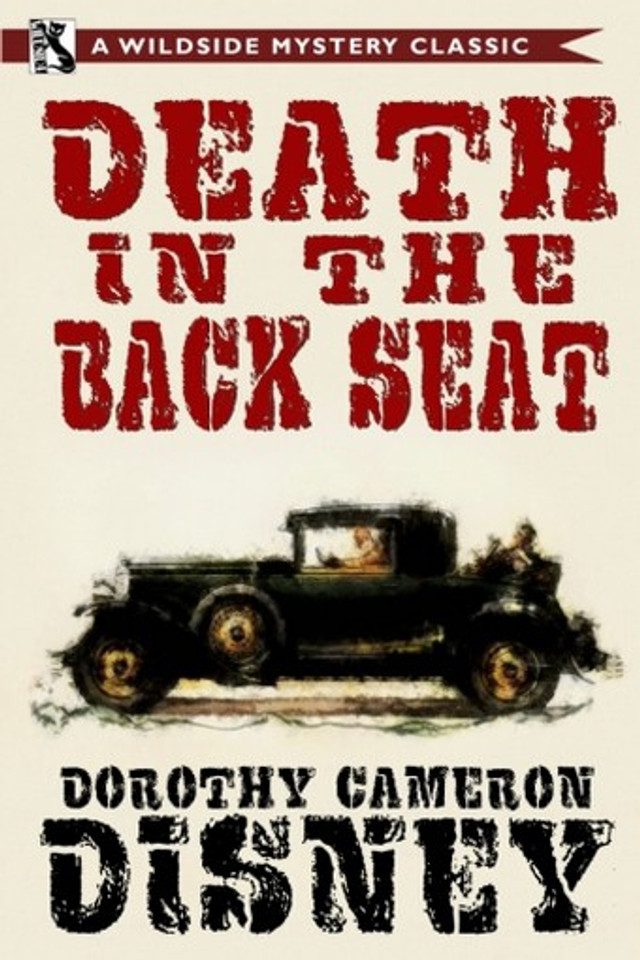
DEATH IN THE BACK SEAT was written by Dorothy Cameron Disney and published by Random House in 1936. It is currently available from Wildside Press.
Jack and Lola Storm, artist and writer, respectively, move from New York City to Connecticut for the promised peace and quiet of country life to pursue their crafts. Life in small town Connecticut may not have the hustle of the big city, but New York didn’t have a domineering land lady, a quirky handyman, an arrogant romance writer, and a dead man right in their own back seat.
DEATH IN THE BACK SEAT is for you if you love a roller coaster ride of a mystery. It’s like a Midsomer Murder…only in 1930s Connecticut.
Strengths of the story. This is a tag-a-long mystery, meaning we follow along with the investigation, rather than try to solve it. It took a few chapters for the story to truly get started, and then it look off like a shot. I binge read the last 75%. The plot is marvelously crafted and displays a masterful use of foreshadowing that could be used in a lit class. The descriptions of the characters are particularly vivid, allowing me to keep them distinct in my mind. Nearly every time you think Jack, Lola and the local police have things in hand, well, they don’t. There is the thrill of the mystery, heroes in mortal danger, a little habeas corpus, and so much more. It is a fun, if deadly ride.
Where the story lacks compared to the ideal. Stories with twists and turns are always a lot of fun reading start to finish. But often, when at the finish and looking back, there are questions to be asked. My husband says these things bother no one but me…but he can’t be right. The actions of the characters in the midst of the story are solid. But I can’t say the same for the actions that kicked the story off. They are weak. There are a few point where the matters of resolution seem contrived only to leave us in the dark. And a dog is badly treated. No bueno, Dorothy Cameron Disney.
Dexter Wilde is a master in the art of the deal. A day on the charter boat Effing Fun Run is an ideal for catching a fish…and not just the kind that swim. But on this three hour tour, mixing business and pleasure leads to murder.
This is a podcast where we combine storytelling with original music to put you in the heart of a mystery. This season contains original stories, structured to challenge you to beat the detective to the solution.
MOVE IT OR LOSE IT pays homage to the vehicles that propel mysteries forward. A train was the setting for Agatha Christie’s famed Murder on the Orient Express. A river boat then took center stage on Death on the Nile. Cars have been prominently featured in American crime stories with the glory of the get-a-way vehicle. Then there are the heists from carriages to trains to armored trucks.
A charter fishing boat. An ambulance. An ultra-tech sports car. A flat-bed tow truck. A shorty bus. An old school locomotive. A horse. An airport shuttle. A Winnebago. A carriage.
Join authors Ed Teja, Chuck Brownman, Colin Conway, KM Rockwood, Craig Faustus Buck, Erica Obey, Ken Harris, Karina Bartow, Kyra Jacobs, Jack Wolff, and TG Wolff for a mystery to die for. Episodes start dropping Friday, Jan 6, at 1:30p Eastern. Listen HERE or anywhere you get your podcasts.
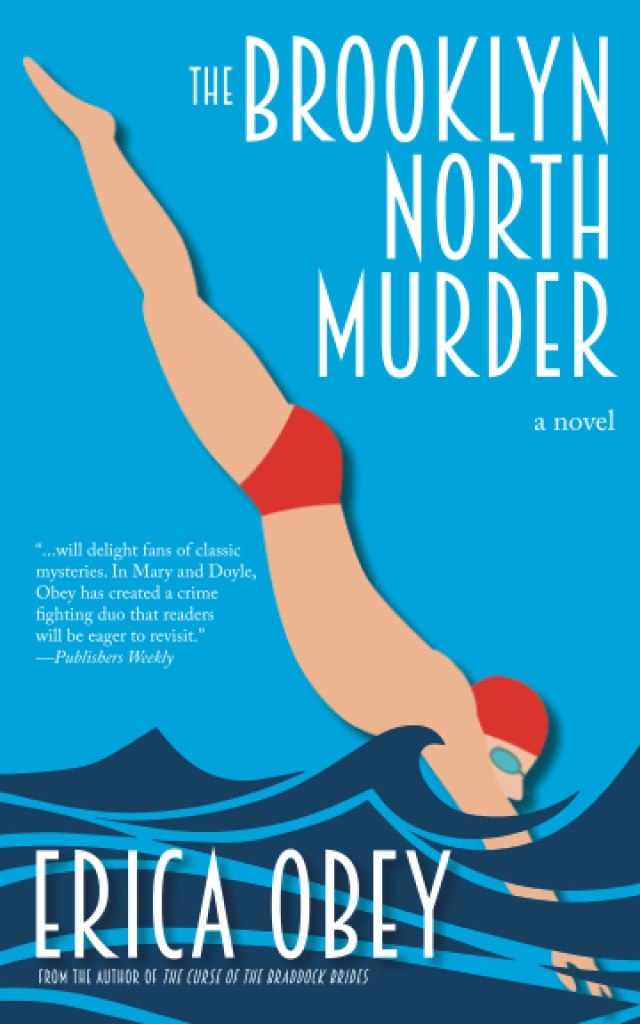
The Brooklyn North Murder is an Amateur Sleuth Mystery. Dr. Mary Watson, adjunct professor at De Sales College in the Hudson Valley, was the reluctant final leg of a triathlon relay. Her idea of fun was five hours in a library, culling through data with her AI creation Doyle, not standing outside in the weather waiting for the swimmers to finish their tasks. But that’s where she was, waiting for a man in a tiny, red speedo to emerge from the campus lake. But he never comes out. And thus begins Watson and Doyle’s first mystery.
Bottom line: The Brooklyn North Murder is for you if you like your mysteries with sharply witty prose wrapped around sophisticated humor.
Strengths of the story. The storytelling style is the shining glory of this mystery. It is fast paced, witty, and clever. The premise is fun. Mary Watson, is a bookish person using her smarts to push library science into next century using AI. AI is personified in Doyle, the virtual partner we all wish we had. He can talk to other computer systems, giving Watson access to just about everything with a pixel or 0/1. Doyle doesn’t just troll the internet, he extrapolates the data into information, but he’s not always 100% spot on. Hey, he’s evolving, give the bot a break.
The third in the party is the college security lead, Mack Byrne. He’s a complex character with a lot going on behind the stoic exterior. The characters are a strong trio, complementing each others skills and personalities.
The story has frequent references to the roots of mystery, which if you geek out on that like I do, you’ll find a true delight. Philo Vance fans celebrate!
Where the story fell short of ideal: This story brings together many classic mystery elements including the swimming pool mystery (in this case a lake), the locked room mystery, red herrings, and the mysterious one-armed man. At times, I found myself a little lost in too much of a good thing. By the end, most of the threads were neatly tied off, but I still had a question or two.
I left town with so many possibilities of where to go, it would have been easier to stay. But there was no staying, not after killing Dexter Green. I would say “poor old” Dexter Green, but he was neither poor nor old. If you remember me saying, Dex was an asshole and, so as much as I wish I wasn’t the one who took him out of this world, well the world is better for it.
I parked my work truck at my apartment, leaving it for Tim or one of the guys to pick up. The little I needed fit into the saddlebags on my 2016 Ultra Classic Limited Low. My bike wanted to head south, and since it was as good as any other direction, I crossed the Ohio River, leaving Indiana for Kentucky.
Usually, no matter what was wrong, a few miles on an open road and I was me again. But killing a man, even one was ornery as Dex, that wasn’t something bright sun and a warm wind could fix.
I rode on, waiting for some direction, some inspiration, or some…something.
The fork in the road made me choose: stay on 69 toward Fulton or get onto Western Kentucky Parkway toward Hopkinsville. I opted for 69 and soon, I was headed for Memphis. When I took a break at a rest stop, I knew where I was going. Because a place like that doesn’t like unexpected guests, I made a phone call. After a solid five hours, I parked in the garage of the Peabody Hotel.
Now, if this were a movie, a character in the situation I’m in would find the cheapest, dirtiest motel in the nastiest part of town to hide from the law.
Well, fuck that.
If the law was gonna to come after me for ridding the world of cancerous growth like Dexter Green, they were going to come to the best there was. And in Memphis, nothing out classed the Peabody. I sat in the Grand Lobby, enjoying a sweet tea and remembering the trips Teresa and I had made here over the years. We both got a kick out of watching the ducks march in or out of the lobby.
It didn’t take much to make people happy.
Just a few ducks, waddling to and from a fountain.
The people entertained me as much as the ducks. It was something to see tour busses pull up and people of all shapes and sizes flock toward the waterfowl. They jockeyed for position. They oohed and ahed. They giggled and pointed. And, of course, they had phones out snapping pictures.
My favorites are the ones who stare at their screen without ever looking at the real-life thing in front of them.
The ducks filed out and, at a slower pace, the audience did the same. I was among them, the city of Memphis stretching out in all directions in front of me. A few short blocks away was Beale Street and beyond it the place Dr. Martin Luther King was assassinated, part of the National Civil Rights Museum. If you haven’t been, go. It’s as much a part of our history as Pearl Harbor, Gettysburg, and the Alamo.
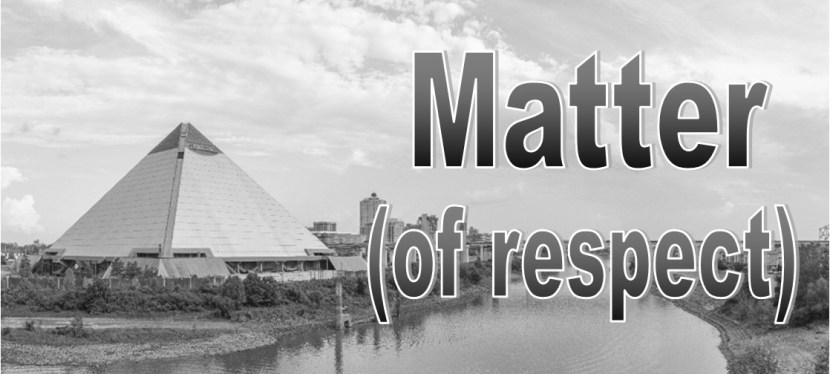
Instead of heading south, though, I went north to one of the most distinctive buildings in Memphis, the Pyramid. The glass tower was home to a scenic overlook, a top end restaurant, an excellent hotel, and Bass Pro Shop.
On the early side of dinner, I sat alone at a table with a view. I dropped a text to Tim to make sure he had my truck. He did and confirmed what I knew: Dex was dead and the police had questions for me.
What was there to say? I backed a truck over the guy.
Did I do it on purpose? Hell, no. But I did it.
I’ll go back eventually. Just not yet.
My waitress was a sweet woman named Shirlee. It wasn’t a name you heard much these days and I said so.
“I’m named after my mother’s sister,” she said. “She died when my mother was pregnant with me. A drunk driver drifted left of center.”
“It doesn’t take much,” I said, thinking of Dex.
“No,” she said. “And it takes even less at sixty miles an hour.”
We chit chatted a bit but as the restaurant filled, her stops by my table were more and more professional. She didn’t rush me. In fact, I would say she appreciated the calm I brought. It wouldn’t be an exaggeration to call me a ballast to the three men sitting two tables over. One had his back to me; the other two I could see. They were loud in a place where a steak can put you back a c-note. Their choice of language wasn’t fit for public consumption. They were half-drunk and wholly disreputable.
I recognized their kind from over forty-years on a construction site. They are too young to be good at much of anything, too stupid to want to learn, and too arrogant to care.
Now let’s be clear. I am not, in anyway, saying this is normal for young people today.
No, I am not.
Assholes like these three, like Dex, have been around forever. As much as I said they were too young, too stupid, and too arrogant, it’s truly a matter of respect. When you respect others as people, you don’t make it your life’s work to tear them down.
You certainly don’t do it for fun, the way these three were with Shirlee.
The one on the end facing me reached out and grabbed her breast. “Squishes like dough,” the asshole we’ll call Lefty said to his buddy when she pulled away. “If that’s Victoria’s secret, she should lock the door and throw the key into the Mississippi.”
My fist tightened on my steak knife as Shirlee ran away.
The three pounded fists and beer bottles on the table. “Shirlee. Shirlee. Shirlee.”
“Don’t be that way,” Lefty shouted. He pulled out his wallet, took out bills and slapped them on the table. “Here’s a tip; buy a bra.”
The three devolved into laughter as a man in a good suit approach. The manager was somewhere in the neighborhood of forty, close to six-foot, and struggling to control his temper. He crossed the room to the assholes’ table, all attention was on him.
Two tables away, I couldn’t hear him. He wasn’t shouting, which showed an immense amount of personal restraint. The one with his back to me was answering.
Everyone heard him. “Listening? Oh, I’m listening. Want me to repeat back what you said? Blah, blah blah, blah fuckin’ blah.” The one we’ll call Van Gogh talked over, through, and around the manager.
A woman at the table across the aisle couldn’t take it anymore. “You are exactly the kind of people who shouldn’t be let into a place like this. Pay your bill and get out.” The Karen wasn’t wrong, but it didn’t help diffuse the situation.
“Eating for two?” Van Gogh asked. “Or is it five? You’re lucky they don’t charge by weight.”
The manager held up his hand to the woman, silencing her outrage. “You have two choices,” he told the table, loudly and distinctly. “Leave or police. Now.”
The trio stood quickly, their chairs crashing to the ground. The last of the men swept his arm across the table, sending the glass and porcelain to the ground. The carpet did little to cushion the blow. What gravity didn’t break, the third man, one we’ll call Stumpy, did. He laughed as his thick soled boots crushed the beer bottles. Lefty snatched Karen’s plate and tossed it onto the mess. Stumpy jumped, landing on it with both feet. He hurriedly stepped back as the plate slid out from under him, laughing as he regained his balance.
“Do it again,” Lefty said, sweeping just about everything from Karen’s table.
Stumpy did it again. Lefty laughed like a jackal.
Things were coming to a head with the manager and Van Gogh saw it. “Come on, let’s go. The food sucks here anyway.”
The three walked out without a care in the world, joking and talking about where they were going next. Behind them was a restaurant full of shock and unhappiness.
Shirlee came to my table, doing her best to hide how shook up she was. “I’m sorry about all that, Hippy. I hope it didn’t take too much away from your dinner.” Her hands trembled as she smoothed her shirt. Behind her, two young men cleaned up the mess.
“Don’t worry about me,” I said to ease her. “Take a few moments for yourself.”
She shook her head as she laughed nervously. “Better to keep busy. Would you like coffee? Dessert?”
It wasn’t right.
“Just the check, please. I have some business I need to see to tonight.”
“On a Friday? Well, make sure you don’t work too hard or too long.” She set the bill on the table.
I set two-hundred-dollar bills down and stood up. “I don’t plan on doing either. Keep the change. And don’t think twice about those boys. They aren’t worth it.”
I left Shirlee just as one of bussers set the tray of broken plates and glass on the table. “Let me help you with that,” I said, taking the bus tray with me as I left.
Now, it wasn’t a mystery where Lefty, Van Gogh, and Stumpy were going. I was maybe seven minutes behind them, taking the glass elevator down to Bass Pro. It’s not surprising that they were causing trouble on the main floor. Stumpy had his socks and shoes off and trudged through the lazy river. A little kid stood on the edge watching him, all wide-eyed like kids get. Stumpy’s arms went wide. He roared like a bear and kicked water at boy, making him run to his mom.
Van Gogh and Lefty were huddled over something. I couldn’t see what they were up to, but it wasn’t good as they kept looking over their shoulders.
I wasn’t a stranger to the store. Not only am I a regular customer back home, but I had done some window shopping prior to heading up to dinner. I set the bus tray next to one of the columns that held up the staircase. Then I went straight to a display of knives and selected Ka-Bar. The big ‘ol Crocodile Dundee knife would make a point about respect that a man couldn’t ignore. I picked up duct tape and some bungee cords. I didn’t have time to work out the math.
Either it would be right, or it wouldn’t.
Stumpy was still kicking up a storm in the shallow pool, his mouth running ahead of his brain whenever men, women, and children crossed his path. I listened to every word while I taped the knife to the post, the sharp blade pointed to heaven.
“Excuse me, ladies,” I said, stopping two women in the same age bracket as Stumpy. “Could you do me a favor and go to that landing up there and attach these bungees around the post.”
Their gaze went from my old face, to the knife, to the bus pan of broken dishes. “Whatcha gonna do?” the taller one asked.
I grinned, couldn’t help it. “I’m gonna give Stumpy there a lesson in respect. Seems likely he missed school that day.”
The taller took the cords. “Give him a lesson for us.” Those brave girls ran up the stairs and appeared at the railing. They let one hook drop down and wrapped the other around the railing post. When they finished, four were hanging down plus two more in my hands.
“Call him,” I said, hoping they could hear me. “Call him over.”
The shorter one backed away, shaking her head, clearly a woman with good sense. The taller one didn’t hesitate. “Hey handsome, watcha doin’ with those ducks?”
Stumpy’s attention snapped upward. The girl was worth looking twice at. “I knew you liked me. Why don’t you come down and I’ll show you.” He kept his eye on her, not on where he was walking.
The girl shook her head. “I’m wearin’ white. I wanna stay dry.”
Ol’ Stumpy licked his lips as he reached the spot near to under her. “I’ll bet you look really good wet.”
“I look good when I’m wearing nothing at all.” She was keeping his attention.
Stumpy had no idea I was behind him. When you’re as old as me, speed isn’t the kind of option it once was. But that doesn’t mean I can’t get the job done.
“I’ll bet you do. Why—hey. What the fuck?” Stubby screamed. Not unexpected since his arms were tied behind him and he was moving, but not toward a pretty girl.
I slapped a long piece of tape over his mouth and then three more because I’d heard his mouth. I reached up to the dangling hooks and had him rigged up before he understood what was going on. The bungies and ties kept him against the column but gave him room to move up and down. He started to kick out but felt the kiss of the Ka-Bar. I know because he froze like a rabbit.
I stood in front of him, holding the tip of another Ka-Bar between my index finger and thumb. “Class is in session.”
His eyes locked on the gleam of the blade.
“The twin brother to his knife is taped to the column under you. I did a pretty good job guessing how tall you are. That’s what experience gives you, a good eye.” I turned to the side and picked up the bus tray. “You recognize this?”
I was patient, waiting for him to answer. When you’re teaching a lesson, patience was a must.
He shook his head.
“This is all glasses and dishes and silverware you knocked off the tables at the restaurant.” I pulled out the neck of a beer bottle, it’s jagged edge advertising pain. “You remember now?”
Reluctantly, he nodded.
“Now, we are getting somewhere. Okay, in physics, there is this thing called entropy which says that things tend toward chaos. What does that mean?”
He looked at me like I was a little crazy, which was fine, ‘cause I was feeling a little crazy. When I waited, he shook his head again.
“What it means,” I said, “is that the shit you broke, isn’t going to fix itself. In fact, it can’t be fixed. You took perfectly good glasses and plates and reduced them to chaos.” I shook the tray, the contents scraping across the bottom and into each other. “There’s no going back to what they were. But, that doesn’t mean they’re useless.” I dropped the tray at his feet. “Step in.”
He shook his head, quickly this time.
I picked the knife back-up, changing my grip. “Step in. Don’t make me tell you a third time.”
He tried screaming, whipping his head one way and then the other. A few people were gathering around. There was the mother whose child was still crying on her shoulder. The old man with the Vietnam Veteran hat. The two young women who baited my trap.
His victims.
There was no help coming.
He lifted one foot, yelping and standing taller when his weight sank onto the long blade.
“Now you get the idea,” I said, shoving the bus tray firmly under him. “Your bare feet are going to stand on the glasses and dishes. You pick them up and Ka-Bar is going to do us all a favor and make sure you don’t reproduce.”
The leg he had up, sunk down. I poked the back of his other knee. He brought his leg up quickly up, felt the knife, and then down twice as fast. He jammed his foot onto the detritus he created. His scream was muffled, tears ran down his cheeks as the jagged edges ripped skin apart.
“That’s good,” I said. “Real good. Any questions?”
He had plenty to say but the tape did it’s job. I would guess it was along the lines of “I’m sorry,” “it wasn’t me”, and “let me go.”
An explosion rocked the corner of the store. It wasn’t much louder than an M-80, but in the close confines, it felt a hundred times louder.
“We got this one,” the veteran said.
“Thank you for your service,” I said. “Then and now.”
I marched across the store, acquiring a few things along the way. Some were ordinary, like zip ties, some were not.
Van Gogh and Lefty were packing a small tin with Tannerite. The two-part mix was a household name in legal explosives. When mixed and put in a container, it became live. When struck by a center fire cartridge, it detonates.
The two of them knew enough to be dangerous, but not efficient, which was why the first explosion wasn’t much more than a firecracker. But they were working to correct their mistake.
I turned to see what was handy to contain these two before they succeeded in killing me before the cops had a chance to. Behind me was a group of three men armed with ropes and such.
I never had a posse before.
This was cool.
“Take cover,” one said, and we all did a full second before their second explosion. This one of a M-100 grade.
Still, they were too close, and it knocked them on their asses. They were so busy congratulating themselves they didn’t notice us. That is, not until they were bound, taped, and being carried back to Stumpy.
When they were fully trussed up, I went to Lefty. “When did you start hurting women?” I didn’t ask him if he hurt women. Asking him would have only given him the opportunity to lie. It was obvious from the way he handled Shirlee that he did. “Who was the first one you hit? Your mother? Your girlfriend?”
Lefty lifted his chin, adrenaline convincing him he was brave. “What the fuck is it to you? I don’t do anything they don’t deserve.”
I put the tape back in place and smiled. “Me, too.”
Armed with a newly acquired Barnett XP400 crossbow with a pack of broadheads for big game, I aimed at his right shoulder. The first broadhead went under the clavicle and didn’t come out. The second got the first out and took a chunk of the shoulder with it. Since I’m a measure twice and cut once kind of guy, I put a third into the joint. I hoped I shattered it, but that would be for a doc to determine. I had reason to be optimistic. Lefty’s right arm was a dead weight hanging at his side.
I slapped his cheek, helping him stay conscious. “You with us? That’s right, school’s still in session.”
Stumpy whimpered, getting my attention. He made his choice. His knees were locked straight, sacrificing his feet for his nuts.
I looked into the bus tray. “Not much blood. I imagined more. Don’t worry, I can fix that.”
“No,” he said, through the tape. I ripped one side off. His first intelligible words were, “I’m sorry.” He was covered in sweat, tears, snot. If it came out of your head, he was leaking it.
“I’m sure you are. And you’ll be more sorry when your pinkie toes are in your pockets instead of your shoes.”
“Are you going to kill him,” a young voice asked from behind.
I turned to the child who wasn’t a teen yet. “No,” I said. “Dead people can’t learn lessons. These boys didn’t bother to learn when they were your age, so they have to learn now. Stumpy over here took other people’s property and stomped on it till it was the mess you see there. He didn’t respect the work other people do but I expect he does now.”
Stubby nodded vigorously. “I do, I do, I swear.”
We looked to the meat at the other end. “Lefty there never learned that you don’t raise your hand to people, especially those weaker. Now, he doesn’t have to worry about it. He won’t be raising that hand again.”
“What about him?” The boy pointed at Van Gogh. “What did he do?”
“It’s more like what he didn’t do, and that was listen.” I rose and went to the man, the NF Five-Seven hanging from my hand. It’s a nice handgun for when you want to fire rifle-sized rounds out of a handgun.
He sneered at me, nearly foaming at the mouth. “I don’t answer to you. I don’t care what any of you say.”
“That is exactly why we are here, Van Gogh.”
He was sweating, the pea he called a brain working so hard it was turning to soup. “Why are you calling me that? That ain’t my name. You gonna call me, you call me by name.”
“Like you did to the manager? You don’t listen. If you’re not going to listen, there’s no point to having ears.” The big gun took his left ear off as neatly as a scalpel. Or close enough. Fired that close, he wouldn’t be hearing anything for a while. Or longer.
Van Gogh crumbled as much as he could, howling inarticulately as blood ran down him.
I stepped back, the three students in front of me, my posse behind. “Gentleman, since the moment you sat in the restaurant, you failed to respect those around you. You treated hard working people like trash, you threatened the safety of people shopping in this fine store. You lived life like you were the only ones in the world. You are not.” I lifted my arms, the NF Five-Nine still in my hand. “This is your lesson on respect.”
Stumpy gritted his teeth. “Respect?”
I nodded. “It’s not a big word. R-E-S-P-E-C-T. You just found out what it means to me.”
“Make them sing it,” a woman said from over my shoulder. Her friend, standing next to her, nodded. “The way Aretha did.”
And just when you thought you knew where this story was going…it took a turn for Motown.
“Now for myself, I’m content with what we’ve done here. But these ladies, they are not. Because I respect their point of view, you’re gonna sing for us.” I smiled and you would have, too.
Saxophones rang out from a mobile device made for taking pictures. But music from the soul sounded good on any speaker. Otis Redding’s words from Aretha Franklin’s lips rang out across Bass Pro at the Pyramid. And three very sorry voices joined in.
During the refrain, with the help of an employee who will not be named, I made my exit. I could hear the sirens but couldn’t see the lights as I walked to The Peabody. Back in my room, I called Teresa.
“Where are you? Are you alright? What are doing?” The questions kept coming until she ran out of breath.
“I’m in Memphis, but not for much longer. I’m fine. Did a little clean up tonight. Do me a favor, look up Bass Pro here on the internet.”
Teresa put me on speaker, telling me about our kids and grandkids and everything else she could think of. “It says the police came on a strange mob scene at Bass Pro where three men were being forced to sing Aretha Franklin hits while they bled from wounds. What did you do?”
“Nothing much.” I told her. “I taught a class on the matter of respect.”
“Respect,” she said with a question in her voice. “Hippy, come home.”
“Not yet. I love you.”
“I love you, too.” She sniffled, her voice breaking. I’d made her cry. “Where will you go next?” “Isn’t that the question. I’ll call you when I know.”
END STUFF
No ducks – real or decoy – were harmed in the making of this episode.
If you haven’t seen the ducks walk, check out the Peabody Hotel. Everything about the Pyramid is cool. Really, everything about Memphis is worth seeing for yourself.
Thanks to Josh for picking the weapons and Hippy for making sure I used them right.










 TG Wolff